
Refractive Lens Exchange: Life Without Glasses, for Good
Refractive Lens Exchange (RLE) replaces your eye's natural lens with a premium artificial lens, delivering clear vision at every distance — near, intermediate, and far. Designed for patients over 55, or those unsuitable for laser vision correction, RLE offers a permanent path to spectacle independence with the same trusted technology used in modern cataract surgery.
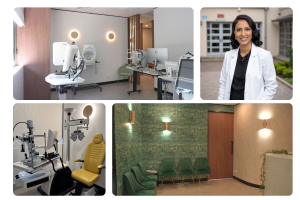
Dr Sonia Moorthy, Fellowship-trained Cataract & Refractive Ophthalmic Surgeon (FRANZCO), brings world-class precision and personalised care to every procedure at EyeHub.
What is Refractive Lens Exchange?
Refractive Lens Exchange is a surgical procedure that removes the eye’s natural crystalline lens and replaces it with an advanced artificial intraocular lens (IOL). Unlike cataract surgery — which treats a clouded lens — RLE is performed on clear lenses to correct refractive errors including presbyopia, hyperopia (long-sightedness), myopia (short-sightedness), and astigmatism.
RLE is often the ideal solution for patients who aren’t candidates for laser procedures like PRESBYOND® or SMILE PRO®, particularly those over 55 experiencing presbyopia — the gradual hardening and loss of flexibility in the natural lens.
Because the artificial lens is designed to last a lifetime, RLE also eliminates the possibility of developing cataracts in the future, making it a truly forward-thinking investment in your vision.

Why Your Vision Changes After 55
As we age, the eye’s natural lens gradually loses its flexibility and clarity — a condition known as dysfunctional lens syndrome. From around age 45, this manifests as presbyopia, making it difficult to read small print or focus on nearby objects. By 55, many people notice their distance vision is also becoming less sharp, and reading glasses or multifocals become a constant companion.
For those whose lens changes have progressed beyond what laser correction can address, RLE provides a definitive solution: replacing the ageing lens entirely with a precision-crafted artificial one, tailored to your unique visual needs and lifestyle.
How Refractive Lens Exchange Surgery Works
RLE is a refined, minimally invasive procedure performed under local anaesthetic. Each eye is treated sequentially, and most patients are back to their normal routine within days.
Comprehensive Assessment
Step 1
Advanced diagnostics including wavefront analysis, biometry, corneal topography, and retinal evaluation. Your IOL is carefully selected to match your lifestyle and visual goals.
Surgery Day
Step 2
Both eyes are treated on the same day under local anaesthetic eye drops — no needles, no general anaesthesia. The procedure itself takes just minutes per eye. A micro-incision is made, your natural lens is gently removed, and your new premium artificial lens is placed precisely into position. Most patients are surprised by how quick and comfortable it is.
Recovery
Step 3
Recovery is typically rapid. Most patients notice clearer vision within hours and are back to their normal routine within 2–3 days. You'll be given clear aftercare instructions and prescribed eye drops to support smooth healing.
Ongoing Follow-Up
Step 4
Your aftercare is included in your fee. We'll see you for scheduled post-operative reviews over the following 12 months to make sure your eyes are settling beautifully and you're thrilled with your results. We're here for you long after surgery day.

Is Refractive Lens Exchange Right for You?
RLE is designed specifically for adults who want to significantly reduce or eliminate their dependence on glasses, particularly those for whom laser vision correction isn’t the best option. If you’re tired of managing multiple pairs of glasses and want a lasting solution, RLE could be the answer.
You May Be a Candidate If You:
- Are aged 55 or older with dysfunctional lens syndrome or advancing presbyopia
- Are not suitable for laser vision correction (e.g., PRESBYOND®, LASIK, SMILE PRO®)
- Have a significant prescription for hyperopia, myopia, or astigmatism
- Want to eliminate the need for reading glasses, multifocals, or contact lenses
- Have otherwise healthy eyes, free from conditions such as advanced glaucoma or macular disease
- Want to prevent cataracts from developing in the future
Because every patient’s eyes are unique, a comprehensive assessment is the only way to confirm if RLE is suitable for you. Our advanced diagnostic tools allow us to tailor the procedure and lens choice to your individual vision needs.
Find out if you’re a candidate – book your eye assessment today
Book Your Eye Assessment TodayRefractive Lens Exchange (RLE)
$3,500*
Cost Per Eye
Comprehensive pre-operative assessment and diagnostics
Premium intraocular lens (IOL) tailored to your vision needs
Surgery performed by Dr Sonia Moorthy (FRANZCO)
All post-operative reviews and aftercare for 12 months
Invest in your vision with Refractive Lens Exchange
At EyeHub, we are transparent with the costs of refractive surgery. Our pricing reflects our commitment to providing world-class treatment with premium lens technology, coupled with exceptional, personalised care.
You can trust our experienced team to guide you through the positive benefits of Refractive Lens Exchange as a treatment option. Please note that RLE is considered an elective procedure and is not covered by Medicare.
Finance options are available for our Vision services. View MediPay Pay Later Calculator.
*Additional fees are applicable for the anaesthetic provider and hospital.
FREQUENTLY ASKED QUESTIONS
Answers to your questions about Refractive Lens Exchange surgery (RLE)
Is Refractive Lens Exchange permanent?
The artificial intraocular lens implanted during RLE is designed to last a lifetime and does not degrade or need replacement. However, as the eye can undergo small natural changes in focus over the years, some patients may benefit from a minor enhancement procedure after 10 or more years. Additionally, a small number of patients may require a YAG Capsulotomy — a quick, painless laser procedure performed in the clinic — if scar tissue develops on the lens capsule months or years after surgery.
Will I still need glasses after RLE?
Most patients achieve excellent vision at all distances and find they rarely need glasses for everyday activities. However, some may still find glasses helpful for very fine print, prolonged reading sessions, or in low-light conditions. The type of IOL selected plays a significant role in the range of vision achieved, and Dr Moorthy will help you choose the lens that best matches your lifestyle needs.
How does RLE compare to LASIK or PRESBYOND®?
LASIK and PRESBYOND® reshape the cornea to correct vision, while RLE replaces the eye’s internal lens. Laser procedures are typically better suited for younger patients with healthy, flexible lenses, whereas RLE is the preferred option for those over 55 whose natural lens is becoming less effective. RLE also has the added advantage of eliminating the possibility of future cataracts.
Is the procedure painful?
No. RLE is performed under local anaesthetic eye drops & with twilight sedation, so you won’t feel pain during the procedure. Most patients describe a mild pressure sensation. After surgery, you may experience slight grittiness or sensitivity for a day or two, which is easily managed with prescribed eye drops.
Does Medicare cover RLE?
No. Although RLE uses the same techniques as cataract surgery, it is classified as an elective procedure because it is performed on a clear lens. This means it is not covered by Medicare. EyeHub offers transparent pricing and flexible finance options to help make the procedure accessible.
