Is Laser Eye Surgery Permanent? A 2026 Guide
Table of Contents
- Is Laser Eye Surgery Permanent? What the Cornea Change Actually Means
- How Long Does Laser Eye Surgery Last?
- Can Eyesight Get Worse After LASIK?
- Laser Eye Surgery After 40: Presbyopia and Reading Glasses
- Factors That Affect Long-Term Results
- Cataracts and Later Eye Treatment After Laser Correction
- Follow-Up Care and Realistic Expectations
- Frequently Asked Questions
Last Updated: October 21, 2026
Is Laser Eye Surgery Permanent? What the Cornea Change Actually Means
Laser eye surgery is permanent in one specific sense: it removes corneal tissue that never grows back. At EyeHub, we explain this to every patient who asks whether the change lasts. The reshaping is lasting. Your eyesight is not frozen in time.
That gap between “permanent correction” and “perfect vision forever” is where most confusion starts. Below, we break down exactly what laser eye surgery does, how long the results hold, and what can still change years later.
Laser vision correction is a surgical procedure that reshapes the cornea to correct refractive error. The cornea is the clear front surface of your eye. Once tissue is removed, it does not regenerate.
This matters because it sets a realistic expectation. You are correcting the prescription you have now, not the one you might have at 60.
How Long Does Laser Eye Surgery Last?
The vision correction itself is designed to last a lifetime. The corneal reshaping is stable for the vast majority of patients. Long-term results depend on your prescription, your corneal thickness, and how your eyes age.
Many patients enjoy clear vision for decades. Some need reading glasses later. A smaller group sees a prescription shift return.
LASIK, PRK and SMILE: How Longevity Differs
All three procedures reshape the cornea, but they do it differently. That affects healing and long-term stability.
- LASIK creates a flap, then reshapes tissue beneath it. Recovery is fast.
- PRK removes the outer layer entirely. Healing takes longer, but there is no flap.
- SMILE removes a small lenticule through a tiny incision. It is less invasive.
Longevity is broadly similar across all three. The main differences are recovery time and how much corneal tissue each removes. Your surgeon will match the procedure to your eye health and prescription.
Can Eyesight Get Worse After LASIK?
Vision can change after LASIK, but true regression is uncommon. When eyesight does shift, it is usually mild and happens in the first year.
There is a difference between regression and a new prescription. Regression means the cornea partially returns toward its old shape. A prescription shift often reflects natural ageing instead.
Regression, Prescription Shift and Enhancement
Regression is when the treated cornea loses some of its correction over time. It is more likely with higher prescriptions.
An enhancement procedure can fine-tune the result later. This is a repeat treatment, and candidacy depends on how much corneal tissue remains.
A common mistake is assuming any vision change means the surgery failed. In practice, most changes are small and manageable.
Laser Eye Surgery After 40: Presbyopia and Reading Glasses
Laser eye surgery after 40 works, but it cannot stop presbyopia. Presbyopia is the natural loss of near focus that comes with age (Presbyopia). It affects nearly everyone, whether or not they had surgery.
This is where expectations need care. Surgery corrects your distance vision. It does not restore the flexible lens inside your eye.
Many patients need reading glasses for close work later in life. That is normal ageing, not a failed procedure. Options like PRESBYOND® at EyeHub are designed to blend near and distance vision for suitable patients.
Factors That Affect Long-Term Results
Long-term results vary from person to person. No two eyes age the same way. Several factors shape how well your correction holds.
- Your original prescription strength
- Corneal thickness before surgery
- Age at the time of treatment
- Overall eye health, including dry eye
- How stable your prescription was beforehand
Candidacy and Prescription Stability
Good candidacy is the strongest predictor of lasting results. A stable prescription is essential. If your refraction is still changing year to year, surgery may not be wise yet.
A thorough pre-operative assessment checks corneal thickness, eye health and prescription history. This is why a full eye examination matters more than a quick quote.
Cataracts and Later Eye Treatment After Laser Correction
Cataracts can still develop after laser eye surgery. The surgery corrects the cornea; it does not touch the natural lens. Cataracts form in that lens, and they remain treatable.
This is one of the most reassuring points. Prior laser correction does not stop you from having cataract surgery later. Modern cataract surgery can account for your previous corneal reshaping.
Your surgeon will use your treatment history when planning lens choices. Keep your records. They help the next surgeon get the best outcome.
Follow-Up Care and Realistic Expectations
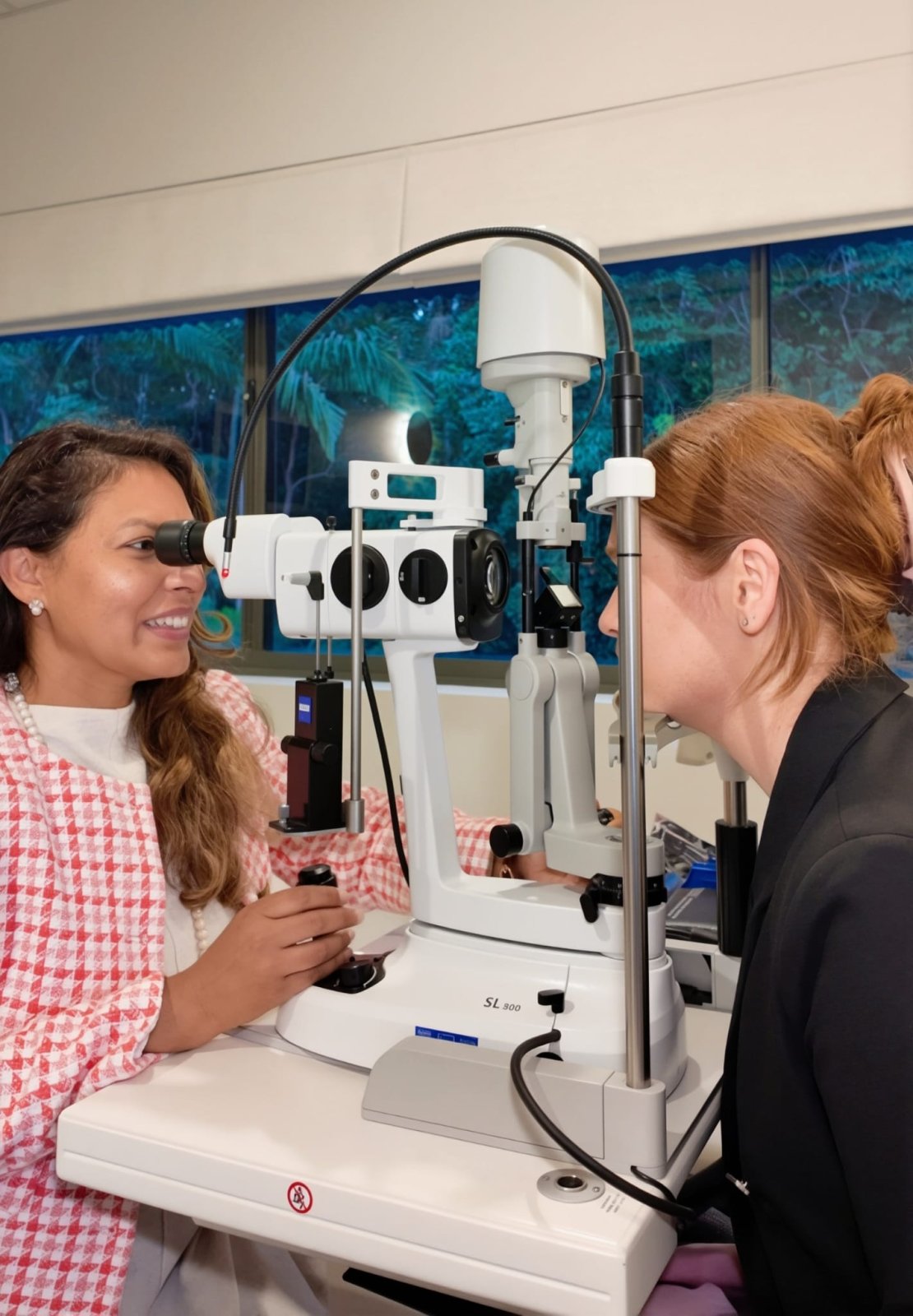
A patient in a bright ophthalmology clinic having their eyes checked with a slit lamp by an eye care professional, calm and reassuring atmosphere
Follow-up care protects your long-term results. Regular eye examinations catch prescription shifts, dry eye and other changes early. Good aftercare is part of the treatment, not an optional extra.
Expect some healing time. Dry eye and night vision changes are common early on and usually settle. Most patients return to normal routines within days, depending on the procedure.
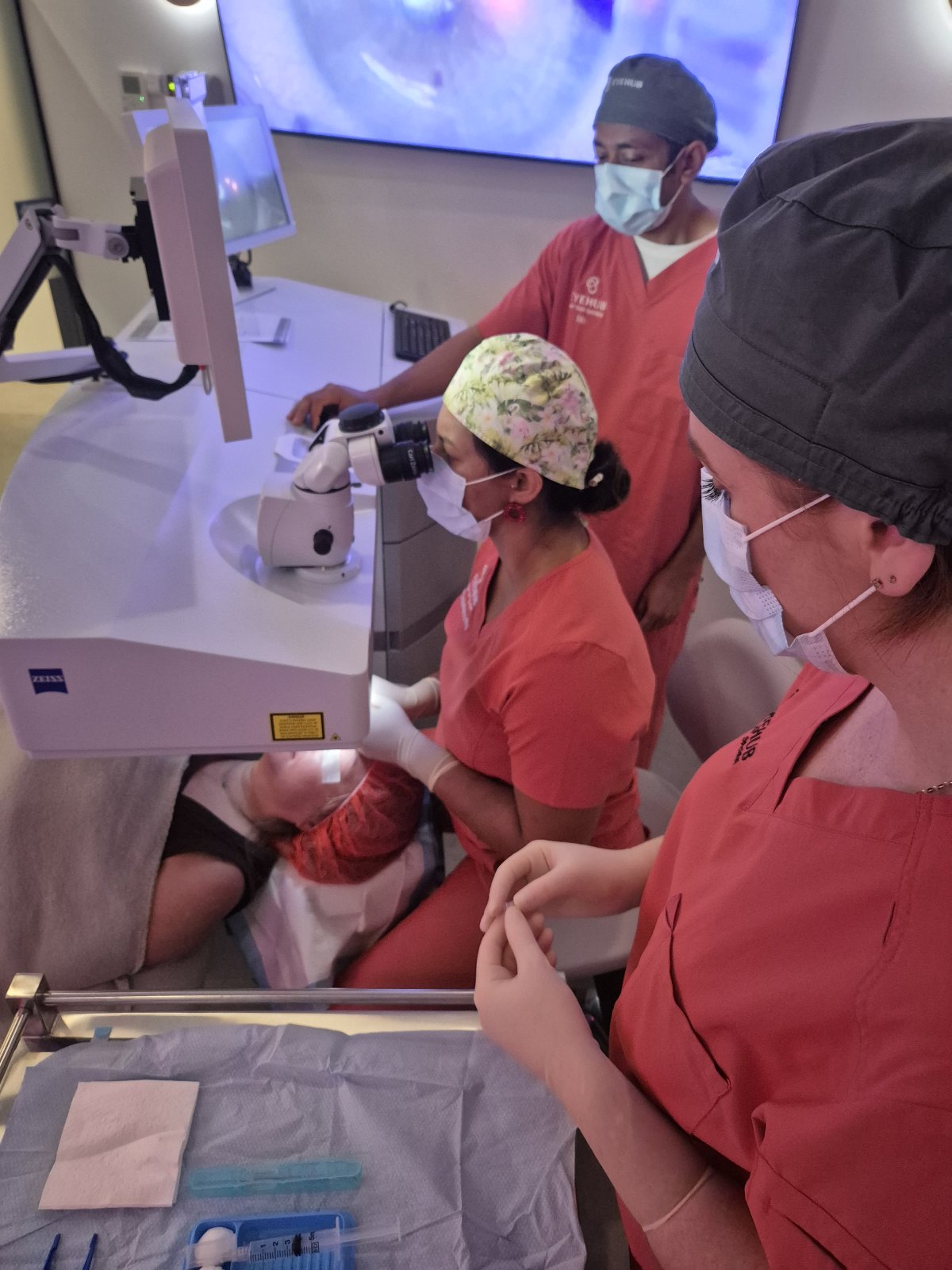
At EyeHub, our team led by Dr Sonia Moorthy uses the Zeiss Visumax 800 and MEL90 laser suite to plan each procedure around your eyes. We offer a full range of options, including PRESBYOND®, SMILE PRO® and LASIK.
Frequently Asked Questions
How long can laser eye surgery last?
The corneal reshaping from laser eye surgery is intended to be permanent, and many people enjoy clear vision for years or decades. However, ‘permanent’ refers to the physical change to the cornea, not a guarantee of perfect eyesight for life. Natural age-related changes such as presbyopia and cataracts can still affect vision later. Most people maintain good unaided vision for many years, but some may need reading glasses or a minor enhancement procedure down the track. Regular follow-up care helps monitor any changes.
Can your eyesight go bad again after LASIK?
Yes, eyesight can change after LASIK, though significant regression is uncommon. Some people experience a small prescription shift over time, and age-related conditions like presbyopia will still occur. If your vision changes enough to affect daily life, an enhancement procedure may be an option, depending on corneal thickness and overall eye health. Your surgeon will assess suitability during a pre-operative consultation and discuss realistic long-term expectations.
Is it worth getting laser eye surgery after 40?
Many people over 40 are suitable for laser eye surgery, but the approach may differ. Presbyopia, the age-related loss of near focus, typically begins around 40 and is not prevented by laser correction. Your surgeon may recommend a procedure like PRESBYOND® that creates blended vision to reduce dependence on reading glasses. Candidacy depends on prescription stability, corneal thickness and eye health. A thorough pre-operative assessment will determine whether surgery is worthwhile for your situation.
Can laser eye surgery be repeated if your vision changes?
In some cases, yes. An enhancement procedure may be possible if your prescription changes after the initial surgery. Suitability depends on factors such as remaining corneal thickness, the type of procedure you had and your overall eye health. Not everyone is a candidate for retreatment. Your surgeon will evaluate your eyes and discuss whether a repeat treatment is safe and appropriate for you.
Wondering whether laser eye surgery is right for your eyes? The honest answer depends on your prescription, corneal health and how stable your vision is. Book a consultation with EyeHub for a full assessment, and our specialists will walk you through your options, from SMILE PRO® to PRESBYOND®, with clear expectations for the years ahead.