Cataract Surgery Recovery Time for Seniors: A Guide
Table of Contents
- Cataract Surgery Recovery Timeline: What to Expect Week by Week
- Cataract Surgery Recovery Tips for Seniors
- Eye Drops After Cataract Surgery: Getting the Routine Right
- Activities to Avoid After Cataract Surgery
- Driving, Reading and Returning to Daily Life
- Warning Signs That Need Urgent Medical Advice
- One Eye or Two: How Recovery Differs
- Conclusion
- Frequently Asked Questions
Last Updated: October 22, 2026
Cataract Surgery Recovery Timeline: What to Expect Week by Week
Most people notice real improvement within a week of cataract surgery, but full healing takes one to three months. This guide from EyeHub sets out a realistic cataract surgery recovery time for seniors, stage by stage. Healing speeds vary with age, other health conditions and whether one or both eyes need surgery. Below, we break down what happens and when. (Source: Australian Government’s healthdirect website)
The First 24 to 48 Hours
Expect watery eyes, mild discomfort and blurry vision on day one. Your eye is adjusting to the new intraocular lens, and swelling is normal. Rest at home, keep the eye shield on as instructed, and start your prescribed eye drops. Avoid rubbing your eye. Many seniors find the first night the hardest because the shield feels awkward. It passes quickly.
Week One: Blurred Vision and Settling In
Blurred vision is common in the first week. Your eye is still healing, and the surface may feel gritty or sensitive to light. Vision may seem worse before it gets better. This is normal. Attend your follow-up appointment so your surgeon can check healing and pressure. Most people can read, watch TV and do light housework within a few days.
Weeks Two to Six: Clearer Vision and Returning to Normal
Vision usually sharpens between weeks two and six. Most daily activities resume, though heavy lifting and strenuous exercise wait a little longer. Your surgeon will confirm progress at follow-up visits. Full clarity can take four to six weeks, and depth perception settles as both eyes adjust.
Cataract Surgery Recovery Tips for Seniors
Older adults often recover well from cataract surgery, but the practicalities of healing can be different when you are managing other health conditions, taking multiple medications or living alone. Age itself does not determine how fast you heal, your general health, how well any chronic conditions are controlled and your home environment matter far more. The tips below are designed for seniors and the people helping them.
Health conditions that can affect recovery planning
- Diabetes: Blood sugar that runs high can slow healing and raise the risk of infection. Aim to keep levels steady in the days before and after surgery, and tell your surgeon and your diabetes team that you have an operation booked. You may need to adjust meal timing or medication around the procedure, always follow your own team’s advice.
- High blood pressure: Well-controlled blood pressure supports healing. Keep taking your usual medicines unless your surgeon or GP tells you otherwise, and mention any blood-thinning medication at your pre-operative assessment.
- Arthritis or reduced hand strength: Eye drops can be hard to administer if your hands are stiff or shaky. Ask about drop aids, have a family member help, or practise the technique before surgery day.
- Mobility or balance issues: Blurred vision in the first days can make falls more likely. Clear walkways, use night lights and keep a phone within reach.
- Memory concerns: A written or app-based drop schedule, pill organiser or a daily check-in from a family member reduces the risk of missed doses.
A caregiver and home-preparation checklist
A little preparation before surgery day makes the first week much easier. Consider working through this list with a family member or friend:
- Arrange transport home after surgery, you will not be able to drive yourself.
- Fill prescriptions and set up a written drop schedule before the operation.
- Prepare easy meals or accept offers of help with cooking for the first few days.
- Clear pathways, remove loose rugs and set up night lighting to reduce fall risk.
- Keep the eye shield, sunglasses and a phone charger beside the bed.
- Have a list of emergency contacts and your surgeon’s after-hours number handy.
- Ask someone to check in daily for the first week, especially if you live alone.

Medication and eye-drop adherence support
Most surgeons prescribe a combination of drops that tapers over several weeks. Missing doses raises the risk of infection and inflammation, so build a routine that suits you:
- Set phone alarms for every dose and label each bottle clearly.
- Use a printed chart or app to tick off doses as you go.
- If you use several drops, space them a few minutes apart and follow the order your surgeon specifies.
- Ask a family member to double-check timing, especially in the first week.
- If you run out or struggle with the routine, call your surgeon’s rooms rather than guessing.
A caregiver or family member can prepare a simple home checklist before surgery day: pre-filled drop schedule, easy meals, clear pathways and a phone within reach. Small preparations reduce strain in the first week.
Eye Drops After Cataract Surgery: Getting the Routine Right
Prescribed eye drops prevent infection and control inflammation. Most surgeons prescribe a combination that tapers over several weeks. Getting the medication schedule right matters as much as the surgery itself.
Skipping doses or stopping drops early raises the risk of infection and inflammation. If you run out or struggle with the routine, call your surgeon’s rooms rather than guessing.
Stick to a routine:
- Wash hands before every dose
- Space different drops by a few minutes
- Keep a written or app-based log
- Ask a family member to double-check timing
Activities to Avoid After Cataract Surgery
Some activities slow healing or raise complication risk. Avoid these until your surgeon gives clearance: (Source: National Health and Medical Research Council (NHMRC) guidelines)
- Heavy lifting, especially over a few kilograms
- Bending with your head below your waist
- Strenuous exercise and swimming
- Rubbing or pressing on the eye
- Dusty or smoky environments
Light walking is fine and helps circulation. Housework like vacuuming can wait a week or two.
Driving, Reading and Returning to Daily Life
Driving is the question we hear most. Most people can drive once vision meets the legal standard and their surgeon clears them, often within a week or two. Reading is usually comfortable within days, though blurriness may come and go. Return to work depends on your job; desk work resumes sooner than manual labour.
Warning Signs That Need Urgent Medical Advice
Most recoveries are smooth, but it helps to know which symptoms are a normal part of healing and which need a call to your surgeon. The guidance below is general, always follow the specific instructions your own surgical team gives you.
Expected temporary effects
These are common in the first days and usually settle on their own:
- Watery or gritty eyes
- Mild discomfort or a scratchy feeling
- Blurred or hazy vision that fluctuates
- Sensitivity to light
- A slight redness at the edge of the eye
Symptoms that need same-day assessment
Contact your surgeon’s rooms promptly if you notice:
- Increasing redness, swelling or pain rather than gradual improvement
- A marked drop in vision after an initial improvement
- Discharge from the eye
- Fever or feeling generally unwell
- Severe light sensitivity that is getting worse
Symptoms that need emergency assessment
Seek urgent medical attention, do not wait for your next appointment, if you experience:
- Sudden severe eye pain
- A sudden curtain or shadow across your vision
- New flashes of light or a shower of floaters (Retinal detachment – symptoms and treatment)
- Sudden loss of vision
- Nausea and vomiting accompanied by eye pain
These can signal infection, inflammation, retinal problems or other complications that need prompt treatment. If you are unsure, call your surgeon’s after-hours number or attend an emergency department. It is always better to be checked.
Do not rub or press on the eye, and do not start or stop any medication without advice from your surgical team.
One Eye or Two: How Recovery Differs
Recovery after a second-eye procedure often feels easier. You already know the drop routine, and one eye is already adjusted. Depth perception improves once both eyes heal, which matters for driving and stairs. Surgeons usually space the two operations weeks apart so each eye heals before the next.
Conclusion
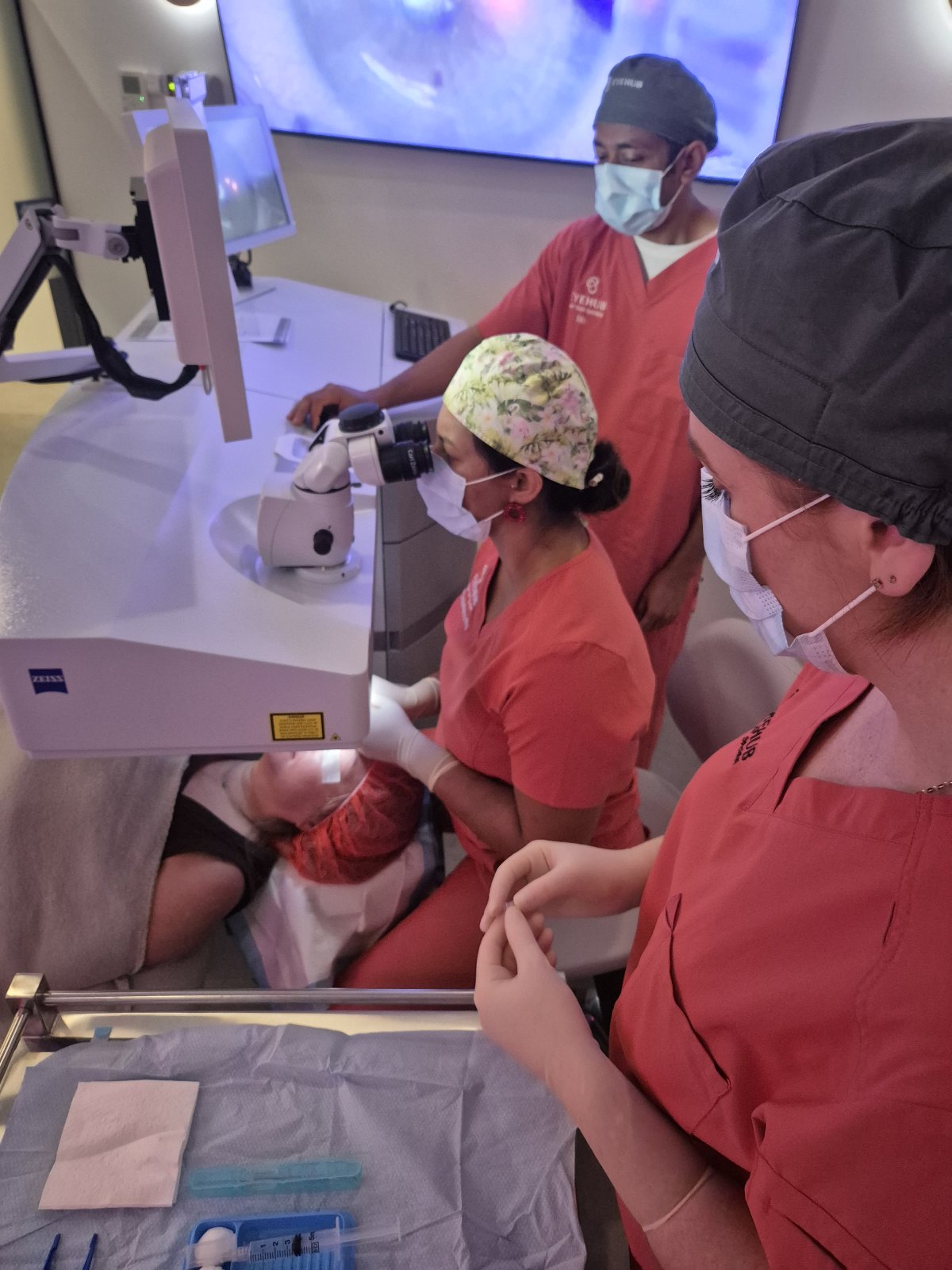
Cataract surgery recovery time for seniors varies, but most people see useful vision within a week and full healing over one to three months. Patience, a steady drop routine and honest communication with your surgeon make the process smoother. At EyeHub, our team led by Dr Sonia Moorthy supports patients through every stage, from cataract surgery to dry eye management, backed by advanced technology including the Zeiss Visumax 800 and MEL90 laser suite. For guidance on your recovery, or to book an emergency appointment, get started with EyeHub and protect your eye health with confidence.
Frequently Asked Questions
How long does it take seniors to recover from cataract surgery?
Most people notice clearer vision within a few days, but the eye keeps settling for longer. Blurred vision and mild redness are common in the first week, vision is usually much sharper by four to six weeks, and full healing typically takes one to three months. Age alone does not slow recovery, but underlying conditions such as diabetes or dry eye can affect the pace. Your surgeon will confirm at follow-up appointments when your eye has healed enough for normal activity.
When can seniors drive after cataract surgery?
Do not drive until your surgeon or optometrist confirms your vision meets the required standard. Many people are cleared within a week or two, but this depends on how quickly your vision settles and whether you are still using dilating drops. Arrange lifts for the first week, keep a follow-up appointment booked, and be honest about blurred vision or light sensitivity before getting back behind the wheel.
What activities should seniors avoid after cataract surgery?
For the first week or two, avoid heavy lifting, strenuous exercise, bending with your head below your waist, and rubbing the eye. Skip swimming and dusty garden work until your surgeon clears you. Housework like vacuuming can wait. Light walking, reading and screen use are generally fine as comfort allows. Always follow your own surgeon’s instructions, as restrictions vary with how the surgery went.
What symptoms after cataract surgery need urgent medical attention?
Seek urgent medical advice if you notice increasing pain, a sudden drop in vision, a curtain or shadow across your vision, flashes of light, new floaters, or redness and swelling that gets worse rather than better. A gritty feeling and mild redness are normal in the first days, but worsening symptoms are not. Contact your surgeon’s clinic straight away or attend an emergency department if you cannot reach them.